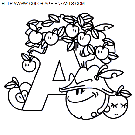
Alphabet Coloring Pages: Learning Letters Through Play

Make letter practice playful with simple coloring routines and games. These ideas work for pre-K, kindergarten, and early elementary learners.
Alphabet coloring pages give children a relaxed way to notice letter shapes, connect letters with sounds, and practice controlled coloring. A short session can fit into morning work, a homeschool lesson, a quiet afternoon, or the time before dinner. The key is choosing a page that matches the child’s age and adding one small letter activity instead of turning the page into a test.
Choose a page your child can manage
Start with bold outlines and one large letter for children ages 3 to 4. A page showing an uppercase A beside an apple is easier to understand than a crowded sheet containing six pictures, tracing lines, and several letter styles. Our simple alphabet coloring pages offer clear choices for young learners who are still building crayon control.
Kindergarten students can handle uppercase and lowercase letters on the same page. For 1st grade, look for smaller details or pictures that invite extra vocabulary, such as bird, branch, beak, and blue for the letter B. If the child repeatedly colors outside narrow spaces and becomes frustrated, move back to a simpler design rather than asking for more careful work. The guide to choosing coloring pages by age can help you judge line size and detail.
- Pre-K: one large letter, one picture, and chunky crayons.
- Kindergarten: uppercase and lowercase letters with two related pictures.
- 1st grade: detailed pictures, short labels, and room to add a word.
- 2nd grade and up: themed letters, patterns, or a full alphabet project.
Set up a focused 10-minute routine
Print one page on US Letter paper and place it on a washable surface. Set out four to six crayons or washable markers instead of a full container, which can distract children who spend more time choosing than coloring. Add a pencil only if the activity includes writing.
Begin by saying the letter name and its most common sound. For M, say, “This is M. M can make the sound at the beginning of moon.” Ask the child to trace the large outline once with a finger, then color it. Keep this opening step under one minute.
Allow six or seven minutes for coloring. During the final two minutes, ask the child to name one more word beginning with the sound, then write that word at the bottom if ready. Stop after 10 minutes for pre-K and kindergarten students, even if the picture is unfinished. Older children can continue for up to 20 minutes when they remain interested.
Add play without adding worksheets
A colored letter page can become part of a quick game. Pick one activity at a time, and keep directions short enough that a 4- or 5-year-old can remember them.
- Color hunt: Ask the child to color the letter red, then find three red objects in the room. This takes about five extra minutes.
- Sound basket: Place four small objects on the table. For B, try a button, block, spoon, and toy car. The child moves the objects beginning with B onto the page.
- Letter path: Set three completed pages on the floor. Call out a sound, and have the child step beside the matching letter.
- Mystery word: Give a kindergarten or 1st grade student three clues about a picture word. For cat, say that it is an animal, has whiskers, and begins with C.
- Toy match: Pair a letter with a nearby plaything, such as D with a doll or T with a toy truck. The toy alphabet coloring collection can provide ready-made picture connections.
Do not correct every answer immediately. If a child places a spoon with the B objects, stretch the first sounds in “spoon” and “button,” then let the child listen again. One calm retry keeps the game moving and shows that mistakes are part of practice.
Adjust the activity by age and skill
For ages 3 to 4, focus on recognition rather than perfect coloring or writing. Work with the letters in the child’s first name before following alphabetical order. Color one page two or three times per week, and display the name letters together at the child’s eye level.
Kindergarten children can compare uppercase and lowercase forms. Fold a sheet of paper in half, write the uppercase letter on one side and the lowercase letter on the other, then place the coloring page above it. Ask the child to point to both forms before choosing colors. This activity takes about 12 minutes.
In 1st grade, turn the picture into a short word task. After coloring S and a sun, ask the student to write sun, sock, and six beneath the picture. Three words are enough. If spelling becomes the main struggle, supply the words on a small card so the child can copy them.
Older elementary students may enjoy designing a themed alphabet for animals, foods, sports, or space. Assign one letter per day, using fine-tip washable markers or colored pencils for smaller details. A complete class alphabet can be divided among 26 students, while a smaller group can give each child two or three letters.
Build a useful alphabet collection
Store finished pages in a letter-size folder rather than displaying all 26 at once. At the end of each week, ask the child to choose two favorites and place them on a wall, refrigerator, or classroom bulletin board. Rotate the display on Monday so familiar letters return without making the space feel crowded.
A simple weekly sequence keeps preparation low. Color a new letter on Monday, find its sound around the room on Tuesday, add a word on Wednesday, and review it beside an older letter on Thursday. Friday can be a choice day when the child revisits any unfinished page for 10 minutes.
Seasonal pictures can refresh the routine. During September and October, match L with leaf, A with apple, and P with pumpkin, then use our fall coloring activities for additional picture practice. In winter, try S for snowman; in spring, use B for bird or butterfly.
Once five pages are complete, spread them across a table and call out letter sounds in random order. The child can place a crayon on the matching page. Finish by inviting the child to select tomorrow’s letter, put its printed page in the folder, and choose the first crayon before cleanup.
Frequently asked questions
What printer settings work best for alphabet coloring pages?
Choose US Letter paper, portrait orientation, and “fit to printable area” if the edges are being cut off. Standard printer paper works for crayons, while 24-pound paper handles washable markers with less wrinkling.
Should I worry if my child writes letters backward?
Letter reversals can happen while young children are learning to notice direction and shape. Show the correct form without scolding, and offer a clear model beside the child’s paper. Ask a teacher for guidance if reversals continue to interfere with schoolwork.
What can I do if my child does not like coloring?
Offer dot markers, short crayons, stickers, or small pieces of colored paper to cover the letter. Keep the activity to three to five minutes and let the child stop after completing one section. Letter learning does not need to depend on coloring alone.
Can alphabet pages support a child learning two languages?
Yes, when the same letter represents a familiar sound in both languages. Name the picture in each language and compare the beginning sounds. If the sounds differ, explain the difference simply rather than expecting the child to guess.